An inspection used to mean a clipboard, a drive-around and an evening typing it up. HOAware puts every property on a map, lets you record a finding with photos on the spot, and turns that finding into a branded PDF notice before the inspector is back in the car — so the homeowner hears about it the same day rather than a month later.
One inspection map per community, worked from a phone or a tablet. Findings, photos and re-inspections land in the same record the notice letters come from, so what an inspector did in the field is already documented by the time they are back in the car.
Every property is a point. Filter by month, work street by street, and tap a property to record what you find without leaving the map.
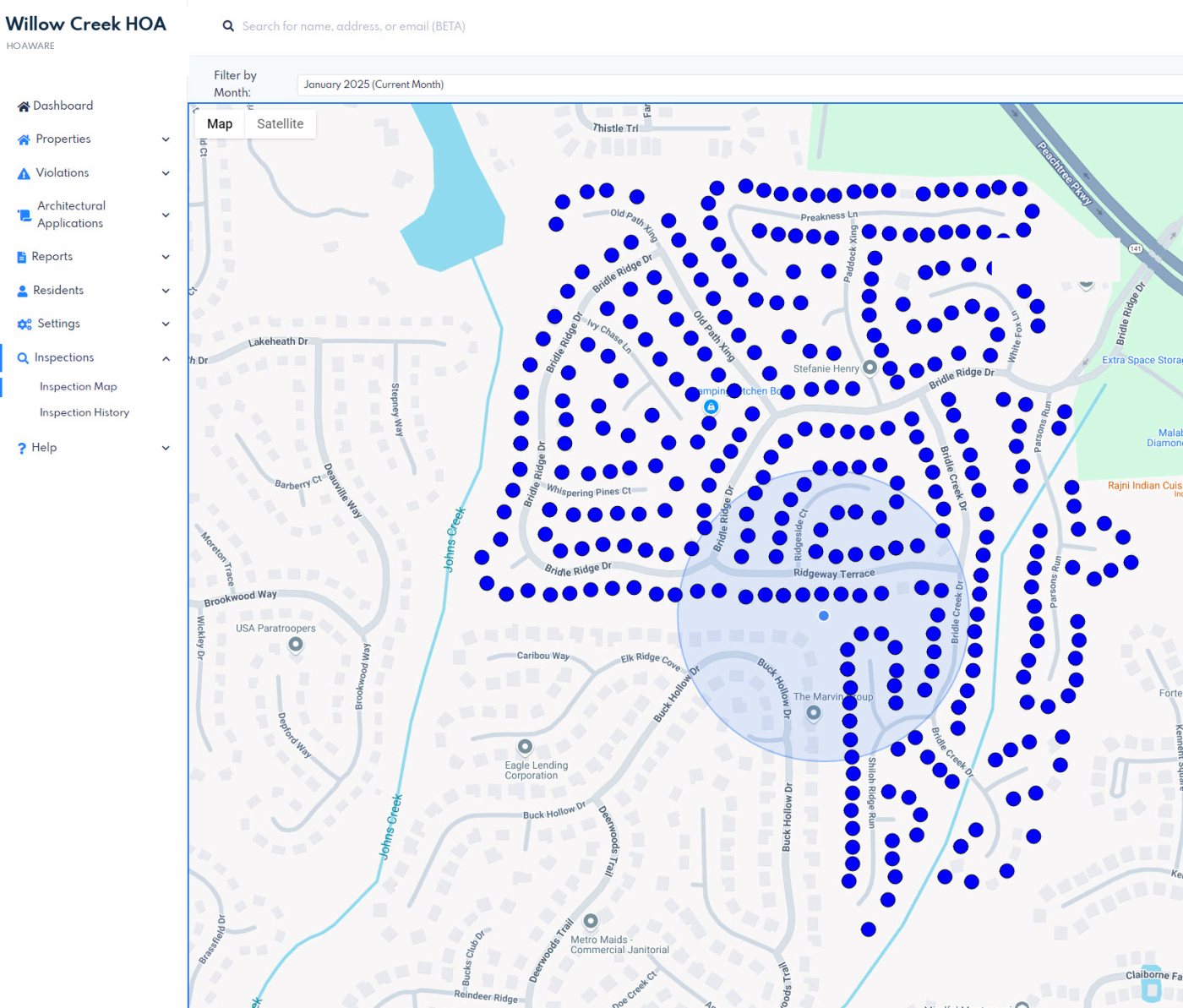
The inspection map in the admin console. Community name and resident details are examples; the underlying map is Google Maps.
A list of addresses does not tell you which side of the street you have already done. A map does, which is the difference between a complete inspection round and the half of the community somebody remembered.
See the round you are on rather than every inspection ever done. Inspection history stays available when somebody asks what happened last spring.
The board app carries the same map, so an inspector walks with it. No notebook to transcribe, because there is no notebook.
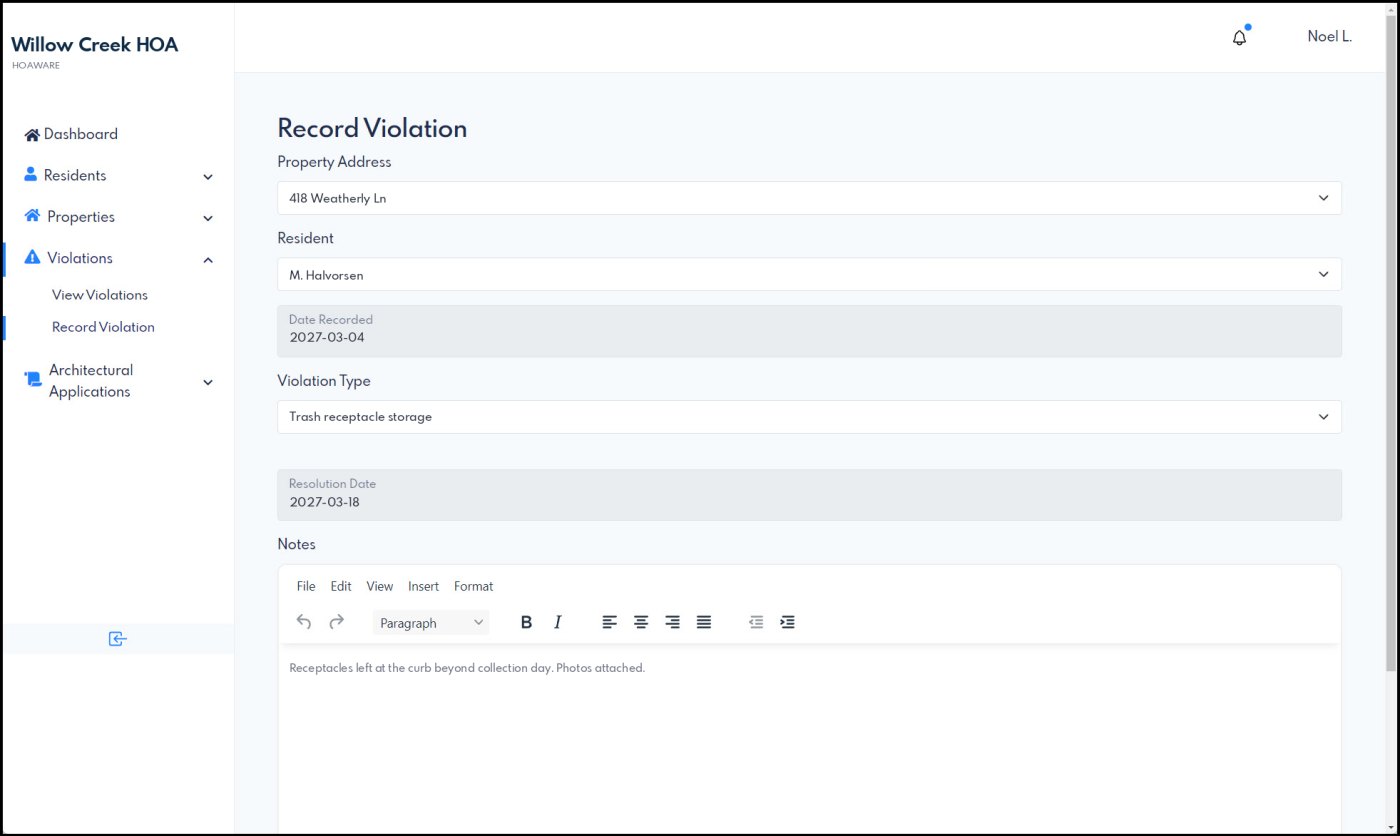
Recording a finding. Sample property and resident.
What the inspector enters is the same record the notice letter, the reminder and the re-inspection all come from. It is entered once.
Chosen from the community directory rather than typed, so the notice goes to the right owner and the history attaches to the right address.
The violation type comes from your own list. The cure-by date is required. Notes and photos capture what the inspector actually saw, while they are still looking at it.
The branded notice, the scheduled reminder and the escalation all read from this record. Nobody retypes it into a letter.
Schedule the re-inspection from the same place, record the outcome, and the violation closes with its full chain intact.
The gap between seeing something and the homeowner hearing about it is where enforcement dies. Save the finding and the notice is already written — a branded PDF, addressed, dated, with the photos attached and a tracking number against it.
Photo, violation type, cure-by date. The inspector is still standing in front of it, which is the only moment the detail is accurate.
A branded notice in your association’s name and format, with the covenant section, the deadline and the photographs already placed. Nobody opens a template, and nobody retypes an address.
It lands in the portal and the app as well as their inbox, so they can read it, see the photos and reply in the same place. Mail it as well and the tracking number is recorded against that letter.
The reminder, the re-inspection and the escalation are set the moment the record is saved. Nobody has to put a date in their own calendar.
On HOAware the first line is the inspection round and the rest does not happen. The letter exists before the inspector is back in the car, and the follow-ups are already in the system rather than in somebody’s head.
Times above describe the manual process boards tell us they are replacing, not a measured benchmark. Yours will differ with the size of your community.
A notice that arrives three weeks after the fact reads as a complaint. One that arrives the same day reads as a reminder, and most people simply fix it.
No transcription, no mail-merge, no evening at the kitchen table. The inspection itself is the entire job, which is what makes a monthly round sustainable for volunteers.
Enforcement that is quick and even gets complied with. Slow and patchy enforcement is what residents learn to ignore — and what shows up on the street a year later.
An approved project usually needs somebody to look at it — before it starts, or once it is finished — and that visit has to end up back on the application rather than in somebody’s memory.
The visit belongs to the architectural application it is checking, so the committee can see what is booked without going looking for it.
The confirmation and the calendar invite go out automatically, so neither side is relying on remembering a conversation.
Weather, contractors and holidays happen. Reschedule or cancel and the application keeps the history rather than starting again.
Completing an inspection updates the architectural application it belongs to, so the committee sees the outcome where the decision lives.
The map and the forms are web screens, so they need a connection. In practice the gap that matters is not coverage but transcription — the time between seeing something and it being written down. Entering it at the curb closes that whether or not you had four bars.
Yes. Permission levels are per module, so an architectural committee member can run inspections and decide applications without access to finances or the full resident record.
Properties are mapped from the address directory, which includes address validation and duplicate detection. A property that is missing or in the wrong place is a directory fix, and it stays fixed.
No, and keeping them apart matters. An inspection is a round you walk; it may produce no findings at all. A violation is a finding against a property, with its own cure date and notice chain. The inspection history shows the round was done even when nothing came of it — which is the record that answers "you never inspect our street".
Bring your address list and we will show you the inspection round as your inspector would walk it.
These features complement what you just read — most customers use them together.
We are happy to give you a virtual tour.
Schedule an appointment!